
CONDITIONS WE TREAT · امراض
معدہ و جگر
Bloating after meals, acidity, sluggish digestion, a heavy liver, weight that will not move, blood sugar that keeps creeping up. In Tibb-e-Unani, digestion is the foundation: when the stomach and liver do not process food properly, the whole body's terrain changes — and pain, inflammation and slow healing grow in that terrain. We treat the foundation, not just the symptom. This is Unani digestive treatment Rawalpindi — assessment first, then a plan built around your Mizaj, not a generic diet sheet.
Book an Assessment → All Conditions →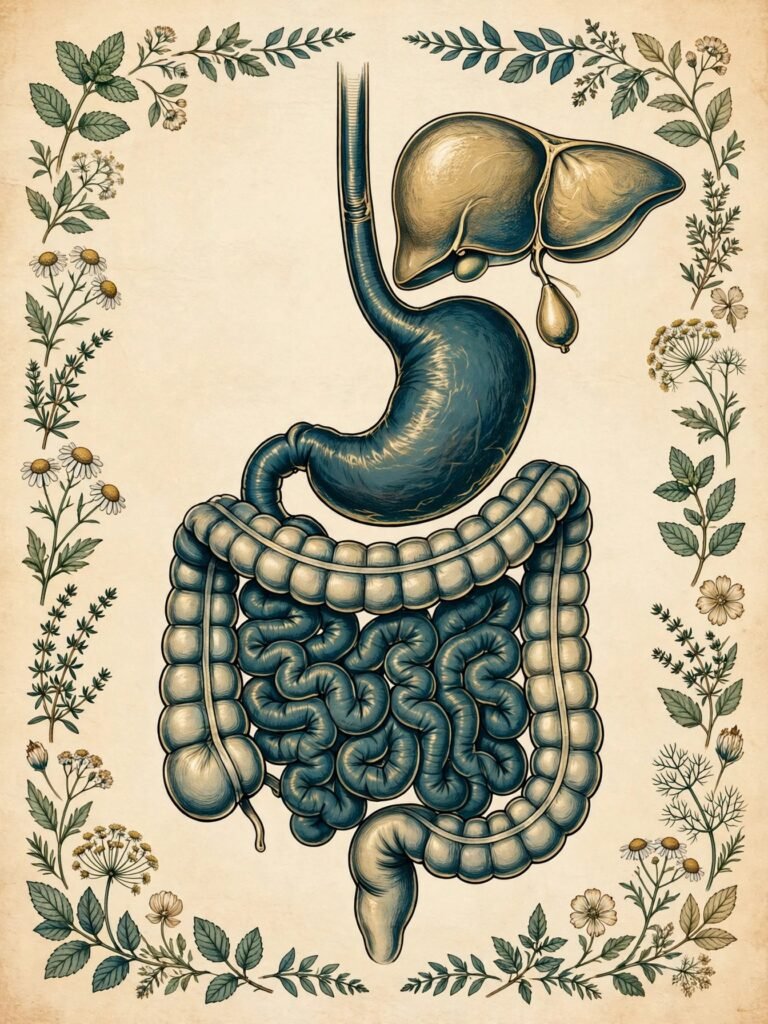
Digestion in Unani medicine is the first stage of the body's nourishment: food is transformed in the stomach, refined in the liver, and carried to the tissues. When digestion weakens — from poor diet, irregular meals, stress, or a temperament out of balance — undigested residue and sluggish liver function burden the blood and tissues. The result shows up as digestive complaints, low energy, weight gain, and often as joint and back pain that resists local treatment alone. Unani (Tibb-e-Unani) is one of the traditional medicine systems recognised by the World Health Organization.
Bloating and gas after meals, acidity and heartburn, constipation or loose motions, heaviness after eating, low energy in the afternoon, and weight or blood sugar that will not settle despite effort.
Bloating, heaviness or acidity that follows eating — the meal itself becomes the trigger.
Afternoon tiredness, brain fog and poor sleep that follow the digestive pattern.
Back and joint pain that keeps returning, because the terrain feeding it has not changed.
Irregular meals, fried and processed food, eating late at night, too little movement, chronic stress, and medicines that disturb digestion. The liver, carrying the extra load, becomes sluggish in turn.
Busy routines, eating on the run, and the Rawalpindi diet of rich, fried food eaten late all push digestion the same way. The pattern is cultural as much as personal — which is why the plan has to fit real life, not an ideal diet chart.
In Tibb-e-Unani terms, this is the home ground of the medicine: the Mizaj of the stomach and liver decides the treatment. A cold, moist digestion needs warming, drying measures; a hot, dry one needs cooling, moistening ones. Ilaj-bil-Ghiza — diet prescribed as medicine — leads here, with herbal formulations supporting the liver and digestion, and the body's own temperament guiding every choice.
Every case at Al Mualij is assessed through ISRA™ — Integrated Structural Rehabilitation Architecture — nine connected stages: intake, lifestyle, Unani constitutional assessment, clinical exam, imaging, the SBRA™ analysis engine, classification into Types A–D, a four-phase roadmap, and follow-up intelligence. Nothing is treated before it is assessed.
The SBRA™ engine — Structural & Biological Rehabilitation Architecture — scores five structural pillars (Alignment, Mobility, Joint Function, Biomechanics, Posture) and five biological pillars (Recovery, Lifestyle, Traditional (Unani), Tissue Support, Nervous System), and returns your Structural Integrity Score™, Structural Age™, Recovery Capacity Score™ and Recovery Risk Score™. The scores decide what is corrected first — and what is left alone.
For digestive and metabolic cases, the ISRA assessment spends more time on lifestyle and constitutional assessment, and the SBRA™ biological pillars — Lifestyle, Traditional (Unani) and Recovery — lead the scores. Structural assessment is still done, because posture and abdominal tension shape digestion more than most patients expect.
Your treatment follows the four-phase ISRA roadmap — Assess, Correct, Support, Maintain — with the emphasis where your case puts it. There are no pre-sold packages: the exact plan is set after your assessment and confirmed by the clinic before treatment begins.
Full first consultation — your history, Nabz and Mizaj, digestion and liver assessment, and review of your blood reports and scans. The SBRA™ biological scores shape the whole plan.
Hands-on structural work — Ilaj-bil-Yad, including gentle abdominal and spinal work where assessment shows tension is restricting digestion — supports the organs' movement and blood flow. For digestive cases the correction is supportive; the main correction is the diet and the liver's function.
Ilaj-bil-Ghiza leads: a personal diet plan matched to your Mizaj, with meal timing and food combinations set at the first consultation. Ilaj-bil-Dawa adds herbal formulations for digestion and liver support, and Ilaj-bil-Tadbeer including Hijama where assessment supports it.
A written eating and movement routine that fits your real day, with follow-up visits that re-measure digestion, weight, energy and the SBRA™ scores — and adjust the plan as the terrain changes.
Pain rarely stays in one place. These pages explain the conditions most often seen alongside this one.
Learn more about how we work: Our Method explains ISRA™ and SBRA™ in full, Treatments explains the four pillars of Unani care, and FAQs answers the questions patients ask before a first visit. Book an assessment at our Satellite Town clinic — Unani digestive treatment Rawalpindi starts with a full first consultation.
Our Method — ISRA & SBRA → Treatments — Four Pillars → FAQs → Book an Assessment on WhatsApp