
Mizaj Assessment: Why Your Constitution Changes Your Treatment Plan
Two men walk into the clinic with the same complaint — lower back pain that has lasted three months. Same age, same kind of work. One of them sleeps badly, feels hot at night, and gets impatient with rest. The other feels cold most of the time, moves slowly in the morning, and stiffens up in winter. Their scans look similar. Their treatment should not be identical — and in Tibb-e-Unani, it is not. The difference is Mizaj, and finding it out is what a Mizaj assessment is for. If you are looking for Mizaj assessment Rawalpindi, this is what actually happens in one, and why it changes the plan that follows.
What Mizaj means, in plain words
Mizaj is your body’s natural constitution — the balance of hot and cold, moist and dry, that you were born with and that shapes how you react to food, weather, work and illness. It is not a mood, and it is not a label that follows you for life. It shifts a little with age, season and health, and when it shifts too far out of balance, that disordered state is called Su-e-Mizaj.
Unani medicine describes four main temperaments. A Damvi temperament runs warm and moist — usually energetic, with a good appetite and a tendency to feel warm. A Safravi temperament runs warm and dry — quick, sharp, easily heated, and often restless in hot weather. A Balghami temperament runs cold and moist — slower to warm up, heavier in winter, and prone to stiffness and sluggish digestion. A Saudavi temperament runs cold and dry — lean, careful, and easily troubled by dry cold and poor sleep. Most people are not a textbook case of one type. They lean one way, with a little of another mixed in — and that mixture is what the assessment is trying to pin down.
Mizaj assessment Rawalpindi: what it actually looks like
There is no machine that reads your Mizaj. The assessment is a conversation and an examination, done properly, and it takes time.
It starts with questions that sound ordinary until you see what they are for. How do you sleep, and do you wake up fresh or tired? What is your appetite like, and what happens after you eat — heaviness, acidity, or nothing at all? How do you cope with heat, and how do you cope with cold? Do you feel better moving or resting? What does your energy do across the day? These are not small talk. Each answer is a clue about which way your constitution leans.
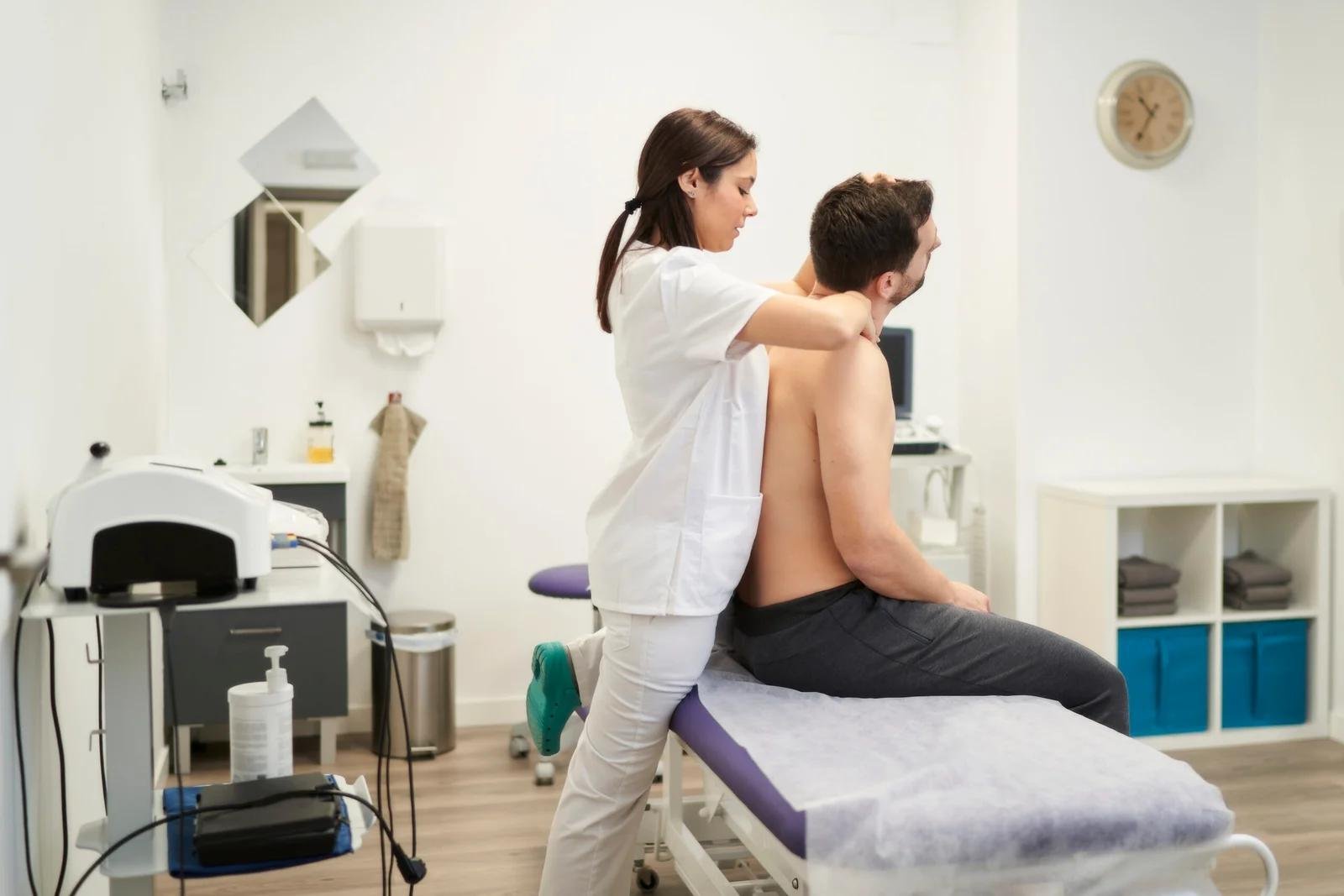
Then comes the examination: your build, your skin, your pulse, your tongue, how you sit and stand and move. A pulse that is quick and strong tells a different story from one that is slow and deep. None of this, on its own, decides anything — it is the pattern across all of it that matters.
This is the third stage of our ISRA assessment. The first two stages are your story and your lifestyle; the Mizaj assessment comes next, before the clinical examination, imaging and the SBRA analysis. It sits early on purpose: if we do not know your constitution, the rest of the assessment is read without its context.
Why it changes the plan
Here is where it earns its place. Take the two men from the start of this article. The one who runs hot and restless may need cooling foods, earlier nights, and hands-on care that is firm but short, with rest built in. The one who runs cold and stiff may need warming foods, gentle movement to start the day, and a slower, more gradual course of hands-on care. Same diagnosis on paper. Different food, different pace, different emphasis — because the body receiving the treatment is different.
That is also why copying someone else’s treatment is a mistake. A neighbour’s exercises, a relative’s herbal medicine, a video’s stretching routine — they were made for another constitution, another back, another history. What helped them can be exactly wrong for you, and the Mizaj assessment is the step that stops that guesswork.
It also explains something patients notice but cannot name: why the same winter hurts one person and not another, why one patient recovers quickly and another slowly on the same plan. The six essential causes of health in Unani medicine — the Asbab-e-Sitta, which include air, food and drink, movement and rest, sleep, and your mental state — act on each constitution differently. Assessment first means the plan is built around those differences instead of ignoring them.
What it is not
A Mizaj assessment is not fortune-telling, and it is not a verdict. Your constitution is a starting point, not a sentence — it can be supported back toward balance, and it changes as you recover. It is also not a substitute for the rest of the assessment. Mizaj on its own does not diagnose a slipped disc or a trapped nerve. It sits alongside the clinical examination, the imaging where needed, and the SBRA scores, and the four-phase plan — Assess, Correct, Support, Maintain — is built from all of them together.
What to bring to your first assessment
If you are coming in for one, bring what you already have: your medicine list, old reports and scans, and a note of when the pain started and what makes it better or worse. Think beforehand about your sleep, your appetite, and how heat and cold affect you — those are the questions you will be asked, and honest answers make the assessment sharper. You do not need a fresh scan just to attend, and you should not stop any medicine before the visit.
One caution, as always: assessment does not replace urgent care. Weakness in the leg that is getting worse, numbness in the saddle area, trouble controlling urine or stool, or back pain with fever — those mean get checked the same day, whatever your constitution.
A final word
Your back pain is not just a disc or a muscle. It is a disc or a muscle in your body, with your constitution, your habits and your history — and that is why two people with the same scan can need different care. A Mizaj assessment Rawalpindi visit is where that difference is found, before any treatment is chosen. Assessment first, then the plan. That order is the whole point.