
Most of the questions patients ask us about Ilaj Bil Yad Rawalpindi are the same ones, asked in different words: what is it, really — is it just cracking backs, does it hurt, and is it safe for me? Here are the honest answers, the way we give them in the clinic.
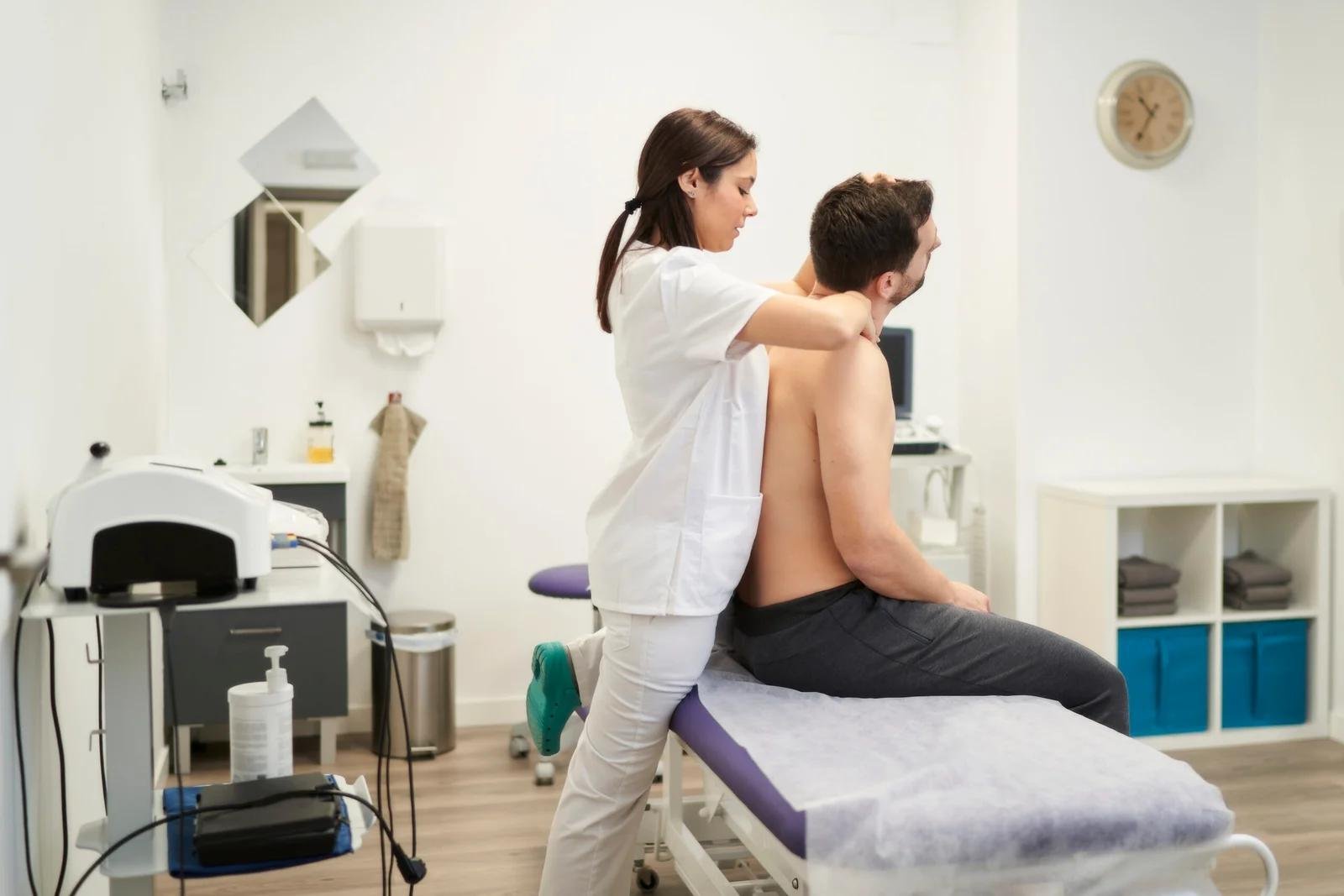
What is Ilaj Bil Yad Rawalpindi, exactly?
Ilaj Bil Yad (علاج بالید) means “treatment by hand”. It is hands-on structural correction in the Unani tradition — examining the spine and joints, preparing the tissues, correcting what can safely be corrected by hand, and then strengthening the result so it holds.
It is not a massage, and it is not guesswork. It follows a set order: assessment first, then preparation, then correction, then strengthening. The four phases have their own names — Tashkhees (diagnosis), Tayyari (preparation), Taqweem (correction), Taqwiyat (strengthening) — and no phase is skipped. A fuller explanation of the method is in our Day 4 article, which walks through all four phases in detail.
At Al Mualij, Ilaj Bil Yad is the structural correction part of ISRA, our assessment system for the spine, posture, movement and temperament. It is one of the four parts of Unani care we practise, alongside Ilaj-bil-Ghiza (through diet), Ilaj-bil-Tadbeer (through lifestyle and regimen) and Ilaj-bil-Dawa (through medicine). Massage — Dalk — sits inside Ilaj Bil Yad as preparation, not as the treatment itself.
Is it the same as chiropractic — or cracking my own back?
No, and the difference matters. A correction here is only done when the assessment supports it, and only on the joint that needs it, with a precise hand technique — never forced, and never done to chase a cracking sound. The neck is treated with particular caution; forceful rotation is avoided.
Cracking your own back is a different thing altogether. We wrote about this on Day 19: when you twist yourself, the force goes to the joint that moves most easily, not the one that needs correcting. That is why self-cracking can feel good for a moment and still leave the real problem untouched — or make it worse.
Does it hurt?
Most people are surprised by how gentle it is. The tissues are prepared first with Dalk, therapeutic massage — soft massage to calm tight muscles, then deeper work where it is needed. Tight muscles cannot be corrected well, so preparation is part of the treatment, not a warm-up for show.
A correction itself is a short, controlled movement. You may feel pressure, and sometimes a mild ache afterwards, the way muscles ache after they have been properly worked. Sharp pain during a correction is a signal to stop, and we stop. If a technique hurts, it is the wrong technique for that person on that day.
What happens at the first session?
The first session is mostly assessment. That surprises people who arrive expecting to be “fixed” in the first ten minutes. We take a full history — when the pain started, what makes it better or worse — then examine how you stand, bend and move, check the muscles and nerves, look at your temperament (Mizaj), and review any MRI or X-ray reports you bring. Old reports help too, because they show how the problem has changed.
If correction is suitable, preparation and correction follow in the same visit where appropriate, and you leave with exercises to do at home. If it is not suitable, we say so — and explain what is suitable instead. Saying no is part of doing it properly.
Which problems does it help — and which does it not?
Ilaj Bil Yad is used where structure is part of the cause: back pain linked to stiffness and poor alignment, neck pain, joint stiffness, posture-related pain, and some disc problems where a nerve is irritated by structure rather than damaged. It is part of a recovery plan — recovery, not cure — alongside the other parts of Unani care.
It is not for everything. A red-flag screen is part of every assessment: worsening weakness, numbness in the saddle area, or loss of bladder or bowel control mean urgent medical care, not a manual correction. Fever with back pain, or severe pain after a fall, need same-day medical attention too. These are the same red flags we listed on Day 21, and they have not changed.
How many sessions will I need?
There is no honest number we can give before the assessment — anyone who quotes one without examining you is guessing. What we can tell you is how it works: follow-up visits build on the first. We re-examine, correct what still needs correcting, and strengthen what is weak. The plan is step by step, and it is explained at each stage, so you know what is being done and why.
Recovery runs at its own speed. Some people feel a real difference in a few visits; for others it is slower, and the honest thing is to say so rather than promise a date. What matters is that each visit has a reason, and you can feel the reason.
Is it safe?
Nothing done to the human body is without risk, and anyone who tells you otherwise is not being straight with you. The safety of Ilaj Bil Yad comes from the order of things: assessment first, red-flag screen always, correction only where it fits, and no force where force is not needed. The most dangerous version of hands-on care is the one done without an assessment — that is the version we do not practise.
The short version
If you are looking into Ilaj Bil Yad Rawalpindi, the question to ask any practitioner is not “can you crack my back?” but “will you assess me first, and will you tell me if hands-on correction is not right for me?” The answer to both should be yes. That is the whole method, in two sentences: first find the cause, then correct only what the cause allows.
Al Mualij — Spine and Nerve Rehabilitation, F-670, New Katariyan, F-Block, Satellite Town, Rawalpindi. Open every day, 10:00 AM to 9:00 PM, including Friday. Booking on WhatsApp: +92 333 5166160.