
“I bent down to pick something up — and something went in my back.”
We hear it almost every day at our clinic in Satellite Town, Rawalpindi. The pain is sudden, the back locks up, and the question is always the same: is it a slip disc, or have I just pulled a muscle?
It matters — because a muscle strain and a slip disc are two very different problems, and what helps one can make the other worse. If you are looking for slip disc treatment Rawalpindi, this guide explains how to tell the two apart, what helps, and when to get assessed.
Two different problems, one similar pain
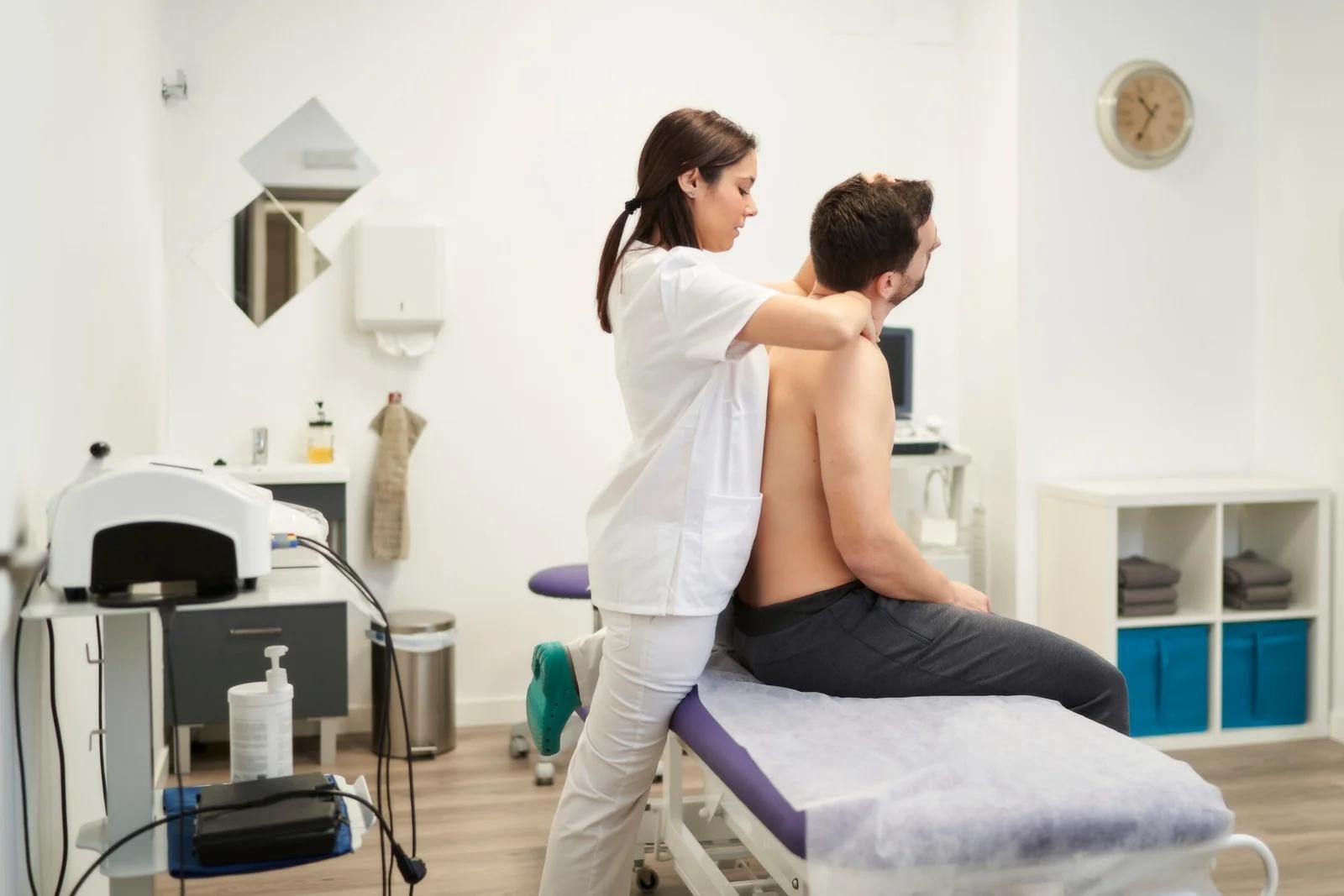
A muscle strain is what it sounds like: a muscle in your back has been overstretched or torn slightly. It hurts and can spasm, but the spine itself is intact.
A slip disc is different. Between the bones of your spine sit soft discs that act as cushions. If one bulges or slips out of place, it can press on a nearby nerve, and the pain starts travelling — down the leg, into the foot, with tingling or numbness along the way.
What a muscle strain usually feels like
Muscle pain has a fairly consistent pattern. The pain stays in one place — in the lower back, usually on one side — and does not travel down the leg. It feels sore and achy, or like a deep stiffness, not sharp or burning. It is worse with movement and better with rest: bending hurts, while lying down eases it. You can often point to the exact spot with one finger.
It usually follows a clear effort — heavy lifting, a sudden twist, a long day of work — and it improves steadily over a few days to a week.
What a slip disc usually feels like
Disc pain behaves differently, and the differences are the clues. The pain travels — from the lower back down the buttock, the back of the thigh, sometimes to the calf or foot. Pain below the knee is a strong hint that a nerve is involved. It feels sharp, burning, or electric, not just sore, and often brings tingling, pins and needles, or numbness in the leg or foot. A muscle strain does not cause numbness.
Coughing or sneezing makes it worse, because these raise the pressure inside the spine. Sitting is often worse than standing, since sitting loads the discs. It may come with weakness — the foot feels heavy, or the leg gives way — and it lingers, not settling in a few days the way a strain does. If the pain travels down your leg, it may be sciatica — read what sciatica really is.
The quick comparison
| Muscle strain | Slip disc | |
|---|---|---|
| Where is the pain? | Pain stays in the back | Pain travels down the leg |
| What does it feel like? | Sore, stiff, achy | Sharp, burning, electric |
| Numbness or tingling? | No numbness or tingling | Often numbness or tingling in the leg or foot |
| Worse with coughing or sneezing? | Not worse with coughing or sneezing | Often worse with coughing or sneezing |
| Sitting or standing? | Rest helps | Sitting often worse |
| How long does it last? | Days to a week, improving | Often lingers or keeps returning |
No single sign proves it — but the pattern usually points one way.
Why the difference changes the treatment
A strain mostly needs time, gentle movement, and care not to re-injure the muscle while it heals. A disc problem needs the pressure on the nerve to be understood and reduced — which starts with finding which disc is involved and what is loading it. That is the starting point for slip disc treatment Rawalpindi. Exercises that help a strained muscle can irritate a pressed nerve.
That is why guessing is risky: treating a disc as “just a pulled muscle” is one of the most common reasons back pain drags on for months. People rest, take painkillers, wait — and the nerve stays pressed. That is why slip disc treatment Rawalpindi starts with an assessment, not a guess.
Slip disc treatment Rawalpindi: what helps — and what to avoid
Whichever one it is, a few honest rules apply in the first days. Keep moving, gently. Short, easy walks beat complete bed rest, which stiffens the muscles and slows recovery. The NHS guide to a slipped disc covers the same first steps. Don’t force a stretch through sharp pain. Gentle movement is good; forcing a stretch can irritate a nerve further.
Heat can help a strain; be careful with a disc. A warm pack often eases muscle spasm, but stop if the leg pain gets worse. Don’t crack your own back. Self-adjustment is a guess made without an examination, and it can make a disc problem worse. Avoid heavy lifting and long sitting — both load the discs and strain the muscles. If your work keeps you in a chair, stand and move every 30–40 minutes.
When to get checked urgently
Most back pain improves with the right care. But some signs mean you should be seen the same day: numbness in the saddle area (inner thighs and around the seat), new weakness in the leg or foot that is getting worse, loss of bladder or bowel control, pain after a serious fall, or pain with fever, or severe pain that does not ease at night.
The bottom line
A muscle strain stays in the back, feels sore, and improves over days. A slip disc travels down the leg, feels sharp or burning, and often brings tingling or numbness. That pattern decides the treatment.
If your pain travels down your leg, keeps coming back, or has lasted more than a few days, get it assessed. For slip disc treatment Rawalpindi, book an assessment and let the pattern decide the plan. At Al Mualij, every patient is assessed first — spine, posture, movement, and any MRI or X-ray reports you bring — before any treatment begins. Then we build a clear, step-by-step, non-surgical recovery plan using Unani medicine, manual therapy, and Ilaj Bil Yad where it fits. No surgery, no injections, no package sold before we have examined you.
Al Mualij — Spine and sciatica treatments clinic, F-670, New Katariyan, F-Block, Satellite Town, Rawalpindi. Open every day, 10:00 AM – 9:00 PM, including Friday. Book on WhatsApp: +92 333 5166160.