
Ask any driver on the Faizabad to Pir Wadhai run what his back feels like at the end of the day, and you will hear the same story. The morning starts fine. By midday there is a dull ache in one buttock. By evening the pain is running down the back of one leg, and getting out of the seat hurts more than sitting in it. That travelling leg pain is sciatica — and for men who drive for a living, it is an occupational hazard, not bad luck. If you drive for a living and you are looking for sciatica treatment Islamabad, the first thing to understand is that the pain in your leg is usually coming from your lower back, where the sciatic nerve leaves the spine — and long hours in the driving seat are exactly what irritates it.
Why driving hurts the sciatic nerve
Sciatica is not a disease in itself. It is what happens when the sciatic nerve — the thick nerve that runs from your lower back, through the buttock, and down the back of the leg — gets pressed or irritated. The pain follows the nerve: buttock, back of the thigh, calf, sometimes the foot. It can burn or shoot, it can tingle, and the leg can feel weak or numb. Sitting makes it worse, which is the cruel part for a driver, because sitting is the job.
Three things about driving add up. First, the position: knees bent, hips bent, lower back rounded for hours, with almost no change. Second, the vibration: engine shake and rough road travel straight up through the seat into the spine. Third, the twisting: turning to check the blind spot and lifting luggage out of the back — all done from a seated, twisted position, often in a hurry. Add a ten- or twelve-hour shift, day after day, and the nerve gets very little chance to settle.
The seat is half the problem
Most drivers never adjust their seat after the first day. That is where the fix starts, and it costs nothing. Sit close enough that your knees bend a little when your feet are on the pedals — if you have to stretch to reach them, your lower back is already working too hard. Your back should touch the seat back all the way down; if there is a gap at your lower back, roll up a small towel and put it there. Keep your shoulders relaxed, and set the headrest so the back of your head is close to it. On a long Islamabad run, a seat that fits you is worth more than any cushion you can buy at a petrol pump.
The wallet in your back pocket
This one sounds small, and drivers laugh when they hear it — until they try it. A thick wallet in the back pocket lifts one side of your pelvis every time you sit down. For an hour, that means nothing. For ten hours a day, it means your spine is sitting crooked the whole shift, and the nerve on one side takes the pressure. Take the wallet out of the back pocket before you start the engine. Put it in the door pocket, the dashboard, or a front pocket. It is the simplest change on this page, and for some drivers it is the one that makes the biggest difference.
Breaks that actually help
You cannot stretch a twelve-hour shift into a short one. But you can break it up. Every hour or so, when it is safe to stop, get out and walk for three or four minutes. Stand tall and walk at a normal pace. That short walk changes the position your spine has been stuck in, and gets blood moving to the muscles that have gone stiff. It is not time wasted — it is part of the work. Between stops, shift your weight in the seat when you can. Do not force a stretch that hurts, and do not twist hard to crack your own back — a sharp twist on a nerve that is already irritated usually makes the next hour worse, not better.
Sciatica treatment Islamabad: what assessment-first care looks like
Some drivers try painkillers and keep driving, and for a mild flare that settles in a few days, rest and gentle movement may be all it needs. But pain that keeps coming back, or is still there after a couple of weeks, is telling you something about the structure — and that is where assessment comes first.
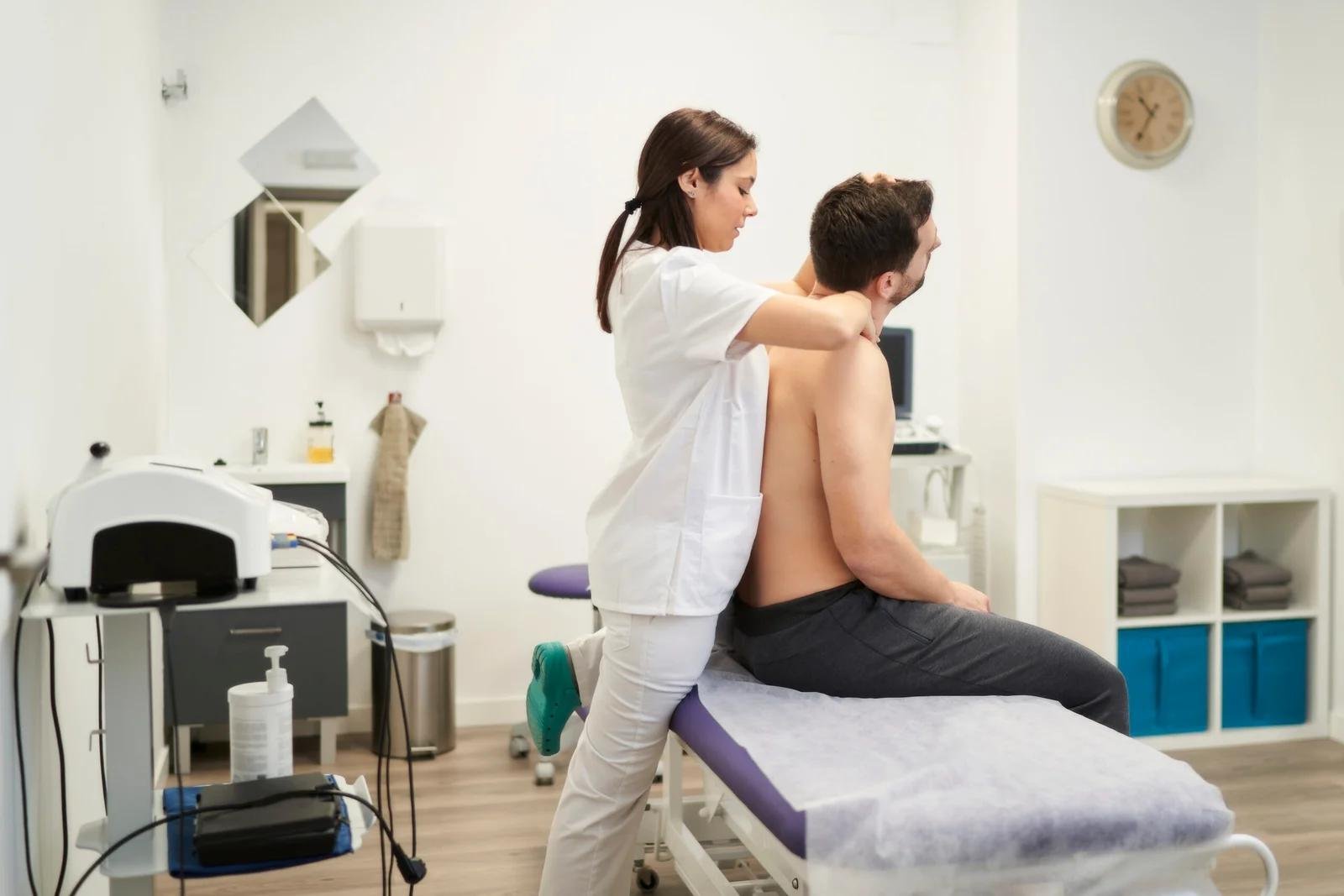
At our clinic the rule is the same as for every patient: assessment first, treatment second. We listen to the story — which leg, when it started, what makes it worse, how many hours you drive — then we look at how you move, sit and stand. In Tibb-e-Unani, your Mizaj — your body’s natural constitution — and the Asbab-e-Sitta, the six essential causes of health, which include movement and rest, sleep, and food, help explain why the same long shift hurts one driver and not another. From that assessment we build a four-phase plan: Assess, Correct, Support, Maintain. Hands-on structural correction, Ilaj Bil Yad, is part of that plan only when the assessment shows it fits you.
What to avoid
Do not spend days in bed waiting for it to pass — long bed rest stiffens everything and slows recovery. Do not keep taking painkillers just to get through the shift without asking why the pain keeps returning. Do not let anyone force your back through a painful movement, and do not copy another driver’s exercises — the stretch that helped his back may be exactly wrong for yours.
When to get checked the same day
Most sciatica settles with time and sensible care. But some signs mean do not wait: weakness in the leg that is getting worse, numbness in the saddle area, trouble controlling urine or stool, pain in both legs at once, or back pain with fever. These are rare, but when they appear, get checked the same day.
A final word for drivers
Your back is your livelihood. A seat adjusted properly, a wallet out of the back pocket, a short walk every hour, and an assessment when the pain keeps returning — none of this is complicated, and none of it needs a day off work to start. If you are weighing up sciatica treatment Islamabad after months of driving through the pain, the useful first step is not a stronger painkiller. It is finding out what is pressing on the nerve, and then fixing that — one change at a time.
Al Mualij — spine and sciatica treatments clinic, F-670, New Katariyan, F-Block, Satellite Town, Rawalpindi. Open every day, 10:00 AM–9:00 PM, including Friday. WhatsApp booking: +92 333 5166160.
One Response