
If you want to book spine consultation Rawalpindi, this is the whole of it: one WhatsApp message, with your name, your problem in one line, and the day and time that suit you. No form to fill in, no app to download, no queue on the phone. We read every request ourselves, and we confirm it ourselves. That is the first step, and for most people it is the only difficult part — not the message, but deciding to send it.
Most people wait. They wait for the pain to settle, for a free week, for a day when they feel sure it is worth a visit. We see the other side of that wait every week: a back that was stiff in one place is now stiff in three, and the walk has changed to protect it. The assessment does not get harder with waiting, but the recovery usually takes longer. Sending the message is not a commitment to treatment. It is a request for an assessment, and the assessment decides what comes next.
What to send
Keep it short. Four things are enough.
Your name, so we know who is coming. Your problem in one line — ‘lower back pain for three months’, ‘neck pain with tingling in the arm’, ‘shoulder pain that will not lift’. The day and time you would prefer. And whether it is your first visit or a follow-up, if you have been to us before.
You do not need to describe everything in the message. You do not need to send your reports first, and you do not need to know what is wrong — that is what the assessment is for. If you already have an MRI or X-ray report, mention that you have it; bring it with you, and it will be read at the visit. If you take regular medicines, bring the list with you too. The Day 13 article explains what to bring and why it matters.
One thing worth saying plainly: do not send the same request twice because no reply came in ten minutes. Requests are read in order, during clinic hours, and every one gets an answer. A second message does not move you up the list — it only makes two requests for one person, and then we have to sort out which one is real.
Book spine consultation Rawalpindi: what happens after you send it
Booking here works in three steps: request, review, confirmation. You send the request on WhatsApp. We look at it — the problem, the day you asked for, and whether that day still has room. Then we confirm a time, or we offer the next available one if yours is full.
This is not instant booking, and that is deliberate. A time slot for a first visit is longer than a follow-up, because the first visit is mostly assessment. If we let anyone take any slot, first visits would be squeezed into follow-up times and the assessment would be rushed. So we hold the time properly, and we confirm it properly. Once you have the confirmation, that time is yours. Come at that time, and tell us on WhatsApp if you are going to be late — the time can then go to someone else rather than sitting empty.
If the day you asked for is full, we will say so and offer the next one. We are open seven days, including Friday, from 10 in the morning to 9 at night — the Day 29 article covers that in full — so there is usually a time within a day or two. Evening times go first, because most people finish work at six. If you can come in the morning or early afternoon, you will usually get a time sooner.
What the first visit looks like
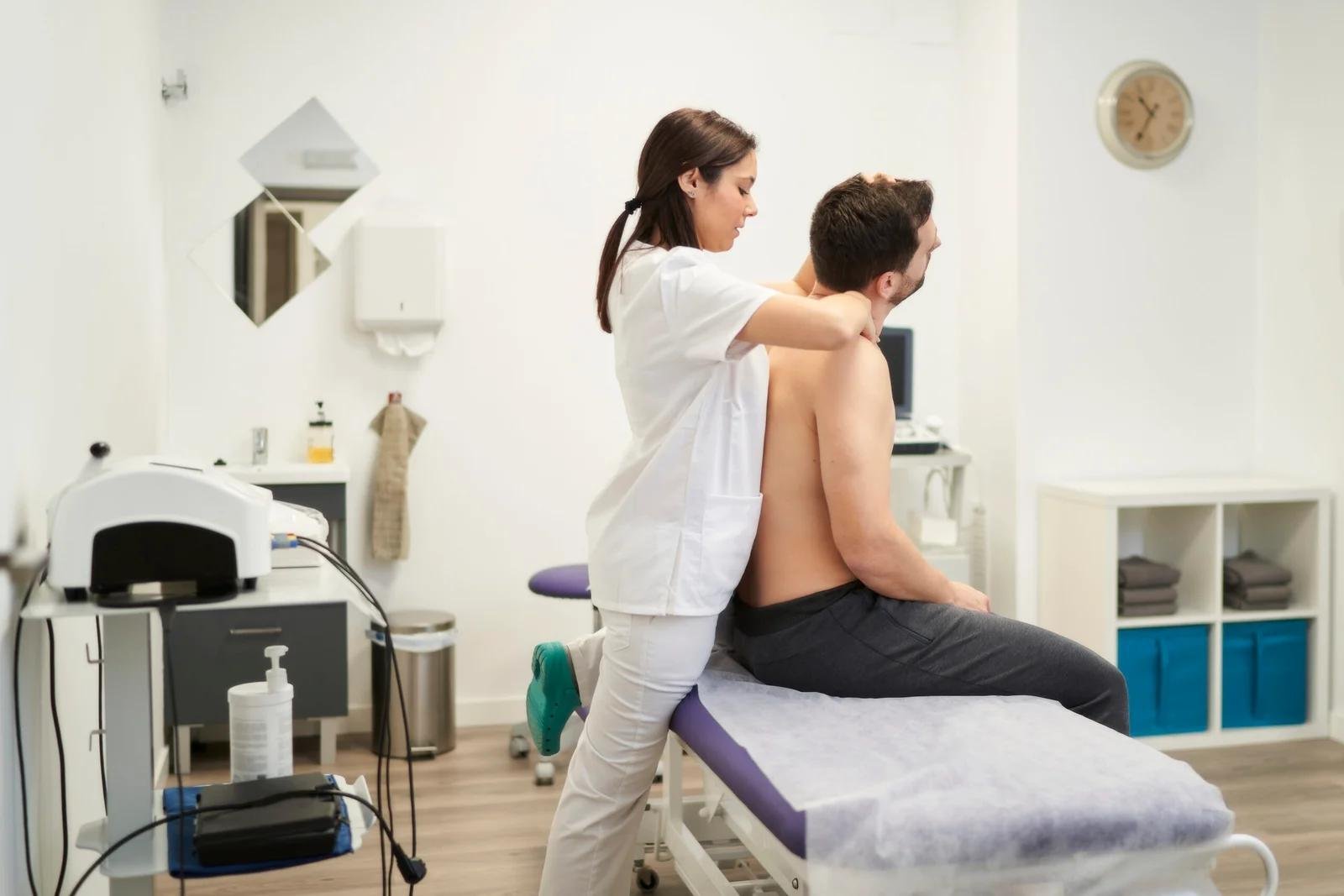
The first visit surprises people who arrive expecting to be ‘fixed’ in the first ten minutes. Most of it is assessment. We take your history — when the pain started, what makes it better, what makes it worse — then we look at how you stand, bend and walk, check the muscles and nerves, look at your temperament, and read whatever reports you brought. Old reports help, because they show how the problem has changed.
The assessment has a name, ISRA, and it runs in nine stages in the same order every time. At the end of it, the problem is given a type and a plan is made in four phases: assess, correct, support, maintain. Hands-on structural correction, Ilaj Bil Yad, is part of the plan only when the assessment says it fits. The Day 7 article walks through the whole first visit step by step, and the Day 24 article explains the nine stages in plain words.
You will leave the first visit knowing what we found, what the plan is, and what the next step is. If correction is suitable, preparation and correction can follow in the same visit where appropriate. If it is not suitable, we say so — and explain what is suitable instead. Saying no is part of doing it properly.
When to come the same day
Most back pain can wait a day or two for an assessment. Some of it cannot. If you have weakness in the leg that is getting worse, numbness that is spreading, loss of bladder or bowel control, fever with back pain, or severe pain after a fall, do not wait for a convenient day — contact us the same day. These are the same red flags we listed on Day 21, and they have not changed.
A final word
If you want to book spine consultation Rawalpindi, send the message today, while you are thinking about it. Your name, your problem in one line, and a day and time. We will review it and confirm. First the assessment, then the plan — never the other way round.
Al Mualij — Spine and sciatica treatments clinic, F-670, New Katariyan, F-Block, Satellite Town, Rawalpindi. Open every day, 10:00 AM–9:00 PM, including Friday. WhatsApp booking: +92 333 5166160.