
If you are looking for a Unani clinic Rawalpindi, you probably have a simple question first: what does Tibb-e-Unani actually do for back pain? Not a slogan, and not a promise — what happens, step by step, when an old system of medicine meets a modern back problem?
Tibb-e-Unani is built on an old idea that still makes plain sense: health depends on balance, and treatment starts by understanding the person, not only the pain. Before anything is prescribed, a Unani physician asks about your constitution, your life, your food, your sleep, and how the pain behaves. Only then does a plan follow. That order — person first, prescription second — is the whole point.
Mizaj: your constitution, in plain words
The first idea is Mizaj, your temperament or constitution. In Unani terms, every person leans toward a particular balance of qualities — hot and cold, wet and dry — and that balance shapes how your body reacts to food, weather, work, and strain. Two people with the same back pain may not get the same advice, because their constitutions differ.
It is not a diagnosis on its own — a starting picture from your story, build, pulse (Nabz), and daily routine, read alongside a proper examination.
Asbab-e-Sitta: the six causes you live with every day
The second idea is Asbab-e-Sitta, the six essential causes of health: the air around you, what you eat and drink, movement and rest, sleep and wakefulness, your mental state, and what your body takes in and lets out. Back pain rarely comes from one of these alone. It usually comes from a pattern — heavy work plus poor sleep, or long sitting plus cold weather, or rich food plus no movement — repeated for months.
The four parts of Unani care
Unani care has four parts, working together — no single part is the whole treatment.
Ilaj-bil-Ghiza — care through food. Food is treated as medicine in the gentlest sense: not a magic diet, but eating that suits your constitution and your condition — warming or cooling foods, simpler meals, regular timings, and cutting back on whatever clearly aggravates your pain or digestion. The advice is practical and personal, not a printed diet sheet handed to everyone.
Ilaj-bil-Tadbeer — care through regimen. This is the daily routine around treatment: how you move, rest, sleep, sit, and work. It covers the habits that either undo a treatment or protect it — a chair that supports your back, breaks from long sitting, sleep at regular hours, and movement little and often. A treatment that ignores your routine rarely lasts, because the routine returns every morning.
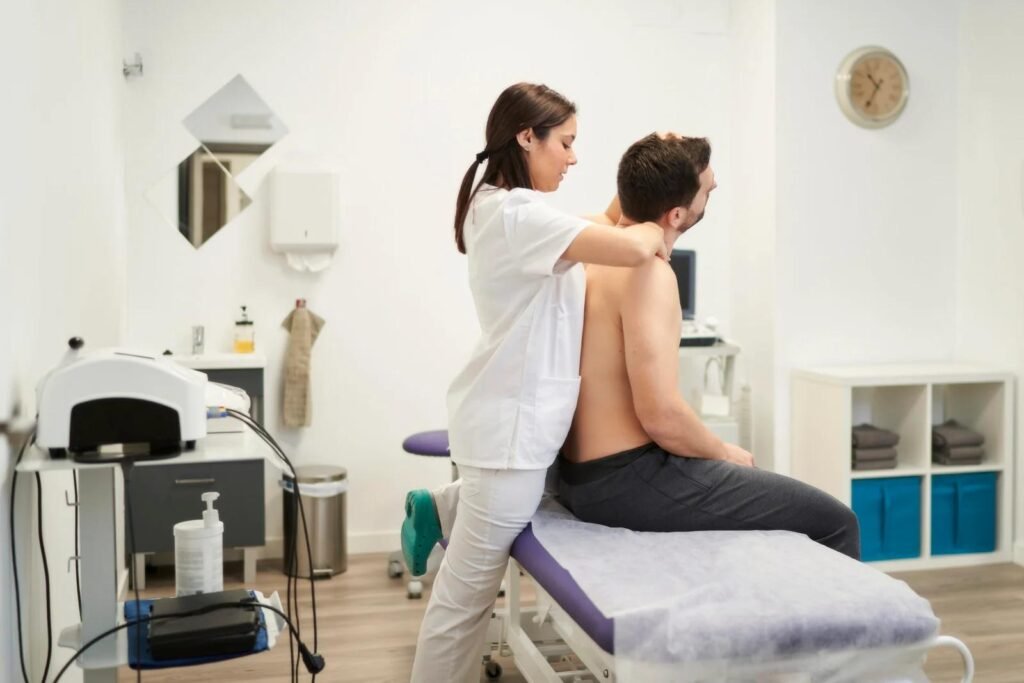
Ilaj-bil-Yad — care through the hands. This is hands-on structural care: assessment-led correction of alignment, movement, and posture, with massage (Dalak) as preparation inside it, not a separate pillar. It deals directly with stiffness and restricted movement, always follows assessment, and is never forced — the neck in particular is treated with caution, and anything that looks like a red flag stops the hands-on plan until it has been reviewed.
Ilaj-bil-Dawa — care through herbal medicine. Herbal formulations support the plan; they do not replace it. They are chosen for your constitution and your stage of recovery, dispensed as part of treatment, not sold as a standalone promise — and judged by how you recover over time, not by a claim made on day one.
Unani clinic Rawalpindi: where herbal medicine fits — and where it does not
Herbal medicine can support recovery: easing stiffness and helping the body settle after strain. What it cannot do is fix a structural problem on its own, replace an assessment, or promise a cure. Anyone who promises that a bottle alone will cure a disc problem is selling you something, not treating you.
A plan that only hands you medicine, without asking about your food, sleep, work, and posture, is not Unani care either.
Assessment first, as always
That assessment is where every plan begins. Our ISRA assessment looks at the whole picture first: your story, your movement and posture, your reports read alongside the examination, and your constitution. Only then does a plan follow, step by step — food, regimen, hands-on care, and herbal support in the proportions that fit you. That is recovery, not a cure promised in one visit, and no two plans look identical.
When to get checked promptly
Most back pain linked to strain and posture eases with the right plan and time. Get checked the same day for weakness down a leg, numbness around the saddle area, bladder or bowel changes, pain after a fall, fever with back pain, unexplained weight loss, or severe night pain that keeps worsening. These are red flags — signs for prompt review, not a home routine or a herbal course on its own.
What to expect from a Unani clinic
So what should you expect? A first visit that asks a lot of questions and examines you properly. A plan in four parts, fitted to your constitution and your life. Honest language about recovery over time, not a cure in a week. And a clinic that tells you plainly when a problem needs a different kind of care — that is what a Unani clinic Rawalpindi should offer.
Al Mualij — Spine & Nerve Rehabilitation, F-670, New Katariyan, F-Block, Satellite Town, Rawalpindi. Open daily, 10:00 AM to 9:00 PM, including Friday. Book on WhatsApp: +92 333 5166160.